Medicare is the federal health insurance program in the United States that primarily serves:
-
People age 65 and older
-
Certain younger individuals with disabilities
-
People with End-Stage Renal Disease (ESRD) or ALS
How Medicare Works
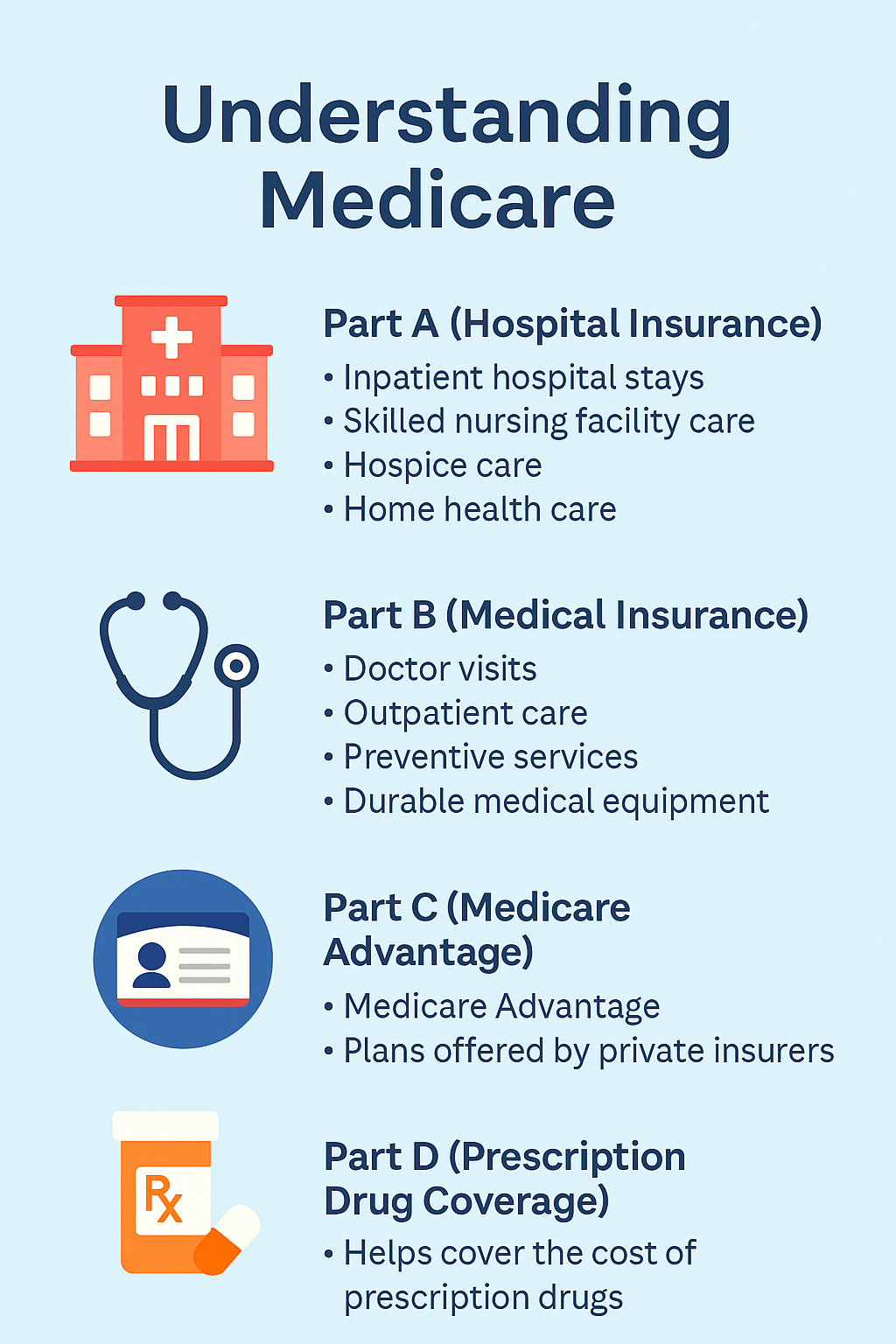
Medicare is divided into different “parts,” each covering specific health care needs:
-
Part A (Hospital Insurance): Covers inpatient hospital stays, skilled nursing facilities, hospice, and some home health care.
-
Part B (Medical Insurance): Covers outpatient care like doctor visits, preventive services, durable medical equipment, and some home health services.
-
Part C (Medicare Advantage): Offered by private insurers, these plans bundle Part A, Part B, and often Part D. They may include extra benefits like dental, vision, and wellness programs.
-
Part D (Prescription Drug Coverage): Helps cover the cost of prescription medications.
Medicare helps millions of Americans afford medical care in retirement or during disability. While it provides essential coverage, it doesn’t pay for everything—beneficiaries often add Medicare Supplement (Medigap) policies or Medicare Advantage plans for broader protection.